Media library

Search by keyword

2084 items found, showing page 2 of 174

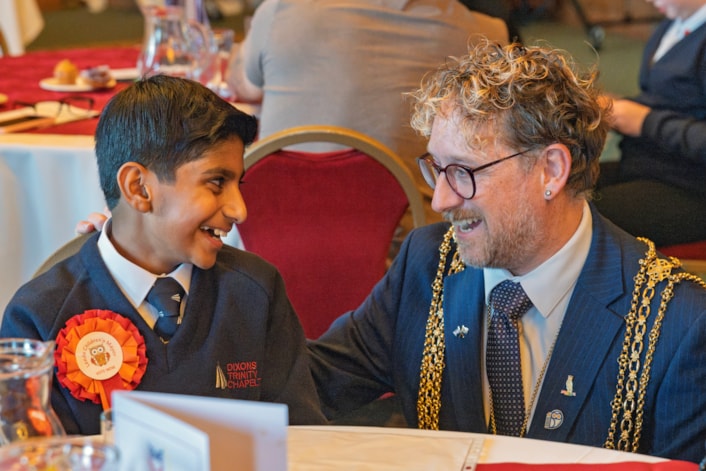
Iftar 2: A group shot of guests at the 2026 iftar meal

Iftar 2

A group shot of guests at the 2026 iftar meal
Ancient coin: Millennia after its creation, the rare coin first came into the hands of James Edwards (pictured), former chief cashier with Leeds City Transport, who gathered fares from bus and tram drivers and counted them at the end of each day.

Ancient coin

Millennia after its creation, the rare coin first came into the hands of James Edwards (pictured), former chief cashier with Leeds City Transport, who gathered fares from bus and tram drivers and counted them at the end of each day.
Ancient coin: The ancient coin came from what was once a Carthaginian settlement on the Spanish coast.
On one side it bears the face of the god Melqart, resembling the Greek hero Herakles and wearing his famed lionskin headdress. At that time, some Phoenician coins carried Greek imagery to make them more appealing to traders.

Ancient coin

The ancient coin came from what was once a Carthaginian settlement on the Spanish coast. On one side it bears the face of the god Melqart, resembling the Greek hero Herakles and wearing his famed lionskin headdress. At that time, some Phoenician coins carried Greek imagery to make them more appealing to traders.
Ancient coin: Kat Baxter, Leeds Museums and Galleries' curator of archaeology and numismatics with the ancient coin now at Leeds Discovery Centre.
The astonishing discovery, handed to an unwitting local bus driver in the 1950s, was produced by Carthaginians, part of the Phoenician culture, in the Spanish city of Cadiz during the 1st Century BC and has now kindly been donated to Leeds Museums and Galleries.

Ancient coin

Kat Baxter, Leeds Museums and Galleries' curator of archaeology and numismatics with the ancient coin now at Leeds Discovery Centre. The astonishing discovery, handed to an unwitting local bus driver in the 1950s, was produced by Carthaginians, part of the Phoenician culture, in the Spanish city of Cadiz during the 1st Century BC and has now kindly been donated to Leeds Museums and Galleries.
Ancient coin: The astonishing discovery, handed to an unwitting local bus driver in the 1950s, was produced by Carthaginians, part of the Phoenician culture, in the Spanish city of Cadiz during the 1st Century BC and has now kindly been donated to Leeds Museums and Galleries.

Ancient coin

The astonishing discovery, handed to an unwitting local bus driver in the 1950s, was produced by Carthaginians, part of the Phoenician culture, in the Spanish city of Cadiz during the 1st Century BC and has now kindly been donated to Leeds Museums and Galleries.
Ancient coin: On one side the coin bears the face of the god Melqart, resembling the Greek hero Herakles and wearing his famed lionskin headdress. At that time, some Phoenician coins carried Greek imagery to make them more appealing to traders.

Ancient coin

On one side the coin bears the face of the god Melqart, resembling the Greek hero Herakles and wearing his famed lionskin headdress. At that time, some Phoenician coins carried Greek imagery to make them more appealing to traders.
Ancient coin: The astonishing discovery, handed to an unwitting local bus driver in the 1950s, was produced by Carthaginians, part of the Phoenician culture, in the Spanish city of Cadiz during the 1st Century BC and has now kindly been donated to Leeds Museums and Galleries.

Ancient coin

The astonishing discovery, handed to an unwitting local bus driver in the 1950s, was produced by Carthaginians, part of the Phoenician culture, in the Spanish city of Cadiz during the 1st Century BC and has now kindly been donated to Leeds Museums and Galleries.
Ancient coin: The astonishing discovery, handed to an unwitting local bus driver in the 1950s, was produced by Carthaginians, part of the Phoenician culture, in the Spanish city of Cadiz during the 1st Century BC and has now kindly been donated to Leeds Museums and Galleries.
On one side it bears the face of the god Melqart, resembling the Greek hero Herakles and wearing his famed lionskin headdress. At that time, some Phoenician coins carried Greek imagery to make them more appealing to traders.

Ancient coin

The astonishing discovery, handed to an unwitting local bus driver in the 1950s, was produced by Carthaginians, part of the Phoenician culture, in the Spanish city of Cadiz during the 1st Century BC and has now kindly been donated to Leeds Museums and Galleries. On one side it bears the face of the god Melqart, resembling the Greek hero Herakles and wearing his famed lionskin headdress. At that time, some Phoenician coins carried Greek imagery to make them more appealing to traders.
Ancient coin: Kat Baxter, Leeds Museums and Galleries' curator of archaeology and numismatics with the ancient coin now at Leeds Discovery Centre.
The astonishing discovery, handed to an unwitting local bus driver in the 1950s, was produced by Carthaginians, part of the Phoenician culture, in the Spanish city of Cadiz during the 1st Century BC and has now kindly been donated to Leeds Museums and Galleries.

Ancient coin

Kat Baxter, Leeds Museums and Galleries' curator of archaeology and numismatics with the ancient coin now at Leeds Discovery Centre. The astonishing discovery, handed to an unwitting local bus driver in the 1950s, was produced by Carthaginians, part of the Phoenician culture, in the Spanish city of Cadiz during the 1st Century BC and has now kindly been donated to Leeds Museums and Galleries.
Ancient coin: Kat Baxter, Leeds Museums and Galleries' curator of archaeology and numismatics with the ancient coin now at Leeds Discovery Centre.
The astonishing discovery, handed to an unwitting local bus driver in the 1950s, was produced by Carthaginians, part of the Phoenician culture, in the Spanish city of Cadiz during the 1st Century BC and has now kindly been donated to Leeds Museums and Galleries.

Ancient coin

Kat Baxter, Leeds Museums and Galleries' curator of archaeology and numismatics with the ancient coin now at Leeds Discovery Centre. The astonishing discovery, handed to an unwitting local bus driver in the 1950s, was produced by Carthaginians, part of the Phoenician culture, in the Spanish city of Cadiz during the 1st Century BC and has now kindly been donated to Leeds Museums and Galleries.