23 Jul 2026
Widower praises power of community groups for giving him new lease of life
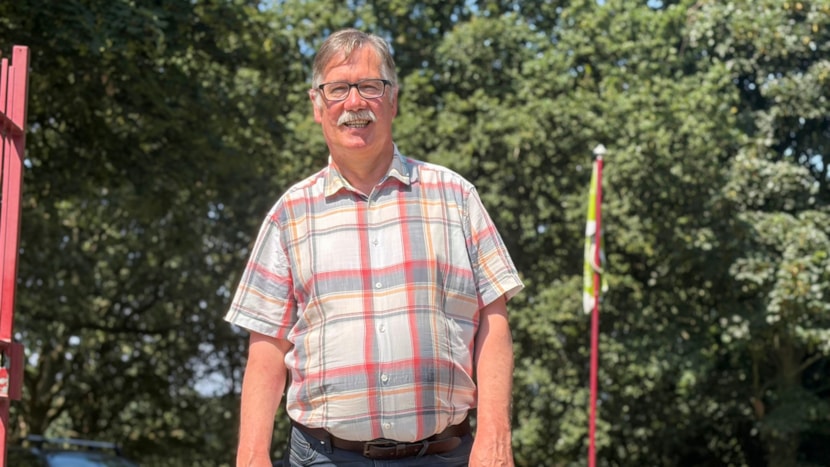
A widower has hailed the “life-changing” impact of community groups for helping him emerge from years of loneliness and solitude to find his voice as a singer in one of Leeds’s best-known choirs.
Colin Clark, 64, of Middleton, now performs sell-out shows to audiences of several hundred as a member of the prominent Leeds Male Voice Choir – marking a dramatic transformation from the isolation that once kept him confined to his home.
He said reaching out to a local community group was “the greatest thing I’ve ever done in my life” as the friendships and encouragement he went on to receive gave him the confidence to follow his interests and sing in public for the first time.
The power of community involvement in improving and protecting the health of people across Leeds is the subject of this year’s annual report by Leeds City Council’s Director of Public Health, Victoria Eaton.
The report, ‘Communities at the Centre: Creating better health together in Leeds’ – to be presented to city health leaders at the Health and Wellbeing Board later today - celebrates the critical value of community and voluntary organisations in enhancing people’s health and wellbeing and reducing inequalities.
For Colin, the turning point began when a neighbour noticed he was struggling and mentioned charity Health for All, which has been supporting south Leeds communities for 35 years.
The charity is part of the Better Together programme, commissioned and funded by Leeds City Council public health team, supporting grassroots organisations to improve health and reduce isolation, particularly in deprived areas.
Colin had found himself retreating from the outside world following the death of Carol, his wife of 28 years, to cancer in 2019. This was further compounded when his disabled adult daughter, who he had been a full-time carer for, moved into permanent supported living care in 2023 at the age of 29.
He said: “When my wife died, I tried to keep everything together for my daughter but it was very difficult. It was the hardest time of my life. By the time my daughter moved out, I had no independent existence – no life, no friends. I was just sitting, staring at walls.”
Reaching out to Health for All led to him joining a walking group and a men’s health group, where a newly-made friend suggested he join local choir, the Middle-Tones.
As his passion and confidence for singing grew, Colin was also encouraged to audition for Leeds Male Voice Choir and last year won a place as a baritone.
He has since performed multiple concerts and gone on tour with the choir, which was founded in 1916 and is well-known, particularly in northern England.
Colin said: “Taking those initial first steps opened a lot of doors for me and changed my life pretty much overnight. I’ve gone from a place where I was living quite a lonely and reclusive existence and didn’t know how to talk to people, to actually having a life, enjoying myself and being happy.
“I’ve made new friends and I’m always astounded people are paying to hear me sing. The impact on my mental health has been staggering. It gives me a real buzz.”
Health for All is one of 3,375 voluntary, community and faith sector (VCFS) organisations working to support Leeds’ many and diverse communities.
Leeds City Council and partners have a long history of close collaboration with these organisations at community-level – a way of working described in the report as a real “strength of Leeds”.
Examples of this work highlighted in the report include:
- The Leeds Community Anchor network – a city-wide network of 30 VCSF organisations whose purpose is to ensure Leeds communities thrive. It co-ordinates the Welcome Spaces Network, where people can gather for warmth, a hot drink and company – attracting 65,653 visits from residents in winter 2024-25 alone.
- Community Champions – Since the pandemic, more than 300 Community Champions, speaking over 40 languages, have been active across Leeds, sharing trusted information about services with people in their communities.
- Neighbourhood Networks – Across Leeds, 34 locally-led neighbourhood networks support older people’s health and inclusion through a range of activities. In the two months between April and June 2025, it is estimated network members made 103,172 visits to 751 activities held across the city.
- Leeds Gypsy and Traveller Exchange (GATE) – represents the needs of the Gypsy and Traveller community, who face extreme health inequalities. The Gate Health and Wellbeing service, commissioned by Leeds City Council’s public health, holds activities and supports with accessing health services.
The report also identified opportunities to further strengthen community-centred work including focusing on the assets and needs of each community, longer-term investment, scaling up successful projects and prioritising communities facing extreme health inequalities.
Victoria Eaton, Leeds City Council’s director of public health, said: “Our communities help create good health in many ways, from everyday acts of kindness between neighbours to services and communities working closely together.
“There is a lot to be proud of in Leeds. As this report, and Colin’s story, shows, great work is already taking place across the city and we must continue to harness opportunities to further strengthen this way of working to improve the health of all.”
Councillor Emma Flint, Leeds City Council’s executive member for equality, adults and health, said: “Communities give us a feeling of belonging and a connection to others as well as ensuring access to health and wider services; their power cannot be underestimated when it comes to protecting and improving people’s health.
“We remain committed to ensuring community-centred approaches are central to our work to improve health in Leeds, to meet the needs of everyone who calls our vibrant and diverse city home.”
To view the report, and accompanying film, visit https://observatory.leeds.gov.uk/dph-report/
For media enquiries contact:
Communications Team
communicationsteam@pr.leeds.gov.uk